
Beyond the Price Tag: Appliance Efficiency and Cost in Rural America
Graphics by Tori Cheatham of Renew Missouri.
For families across rural America, affordability doesn't end at checkout.
As prices rise across the board for products and energy, the federal government is considering ending efficiency requirements for appliances. While this might seem attractive theoretically, by lowering prices of appliances for the budget-conscience consumer (or a home builder or landlord looking to cut corners), it will actually raise the cost of living.
For decades, the U.S. Department of Energy (DOE) has evaluated appliance efficiency standards using a lifecycle cost approach. Rather than asking only, "How much does this appliance cost today?" DOE has historically asked a broader question: How much will this appliance cost a household over its entire useful life?
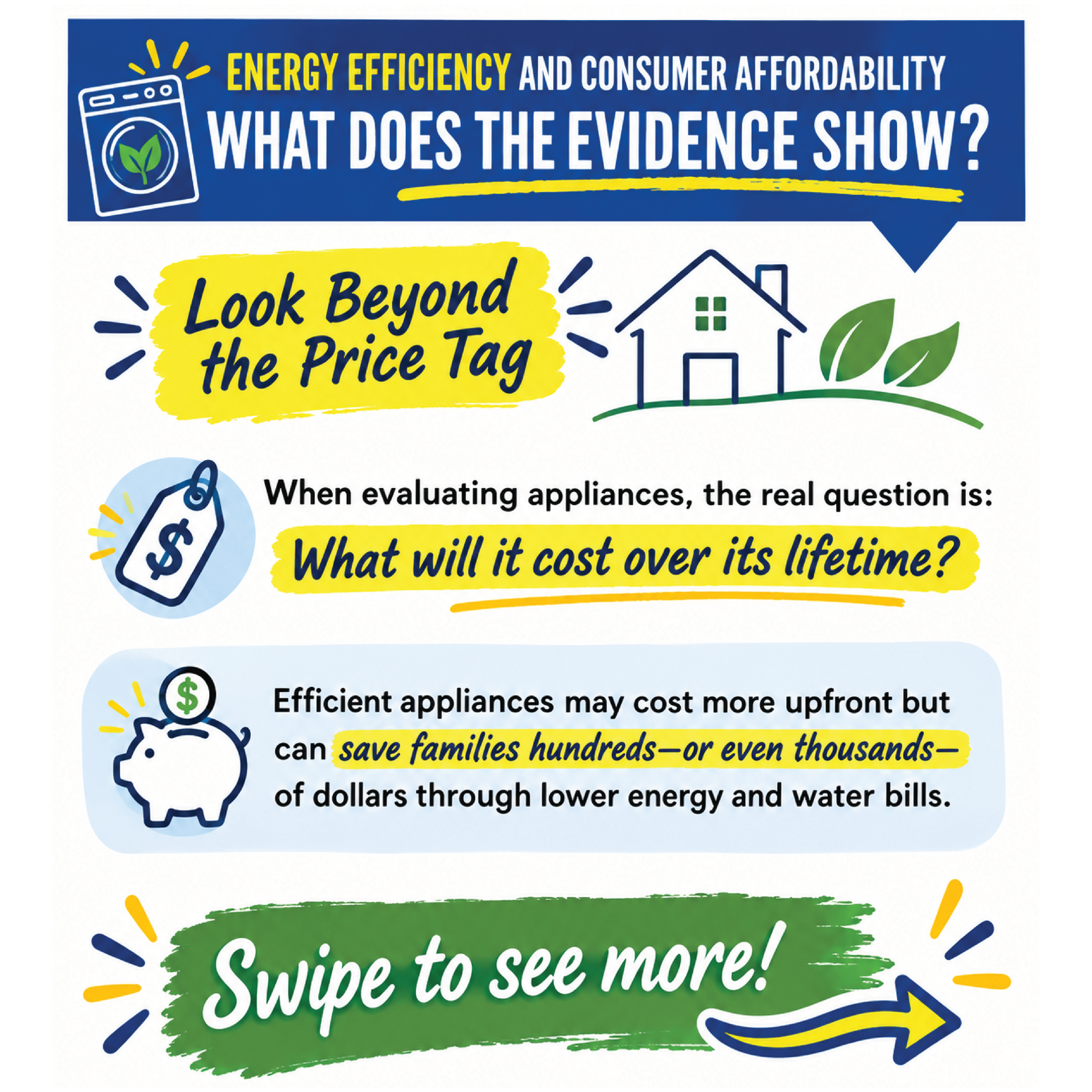
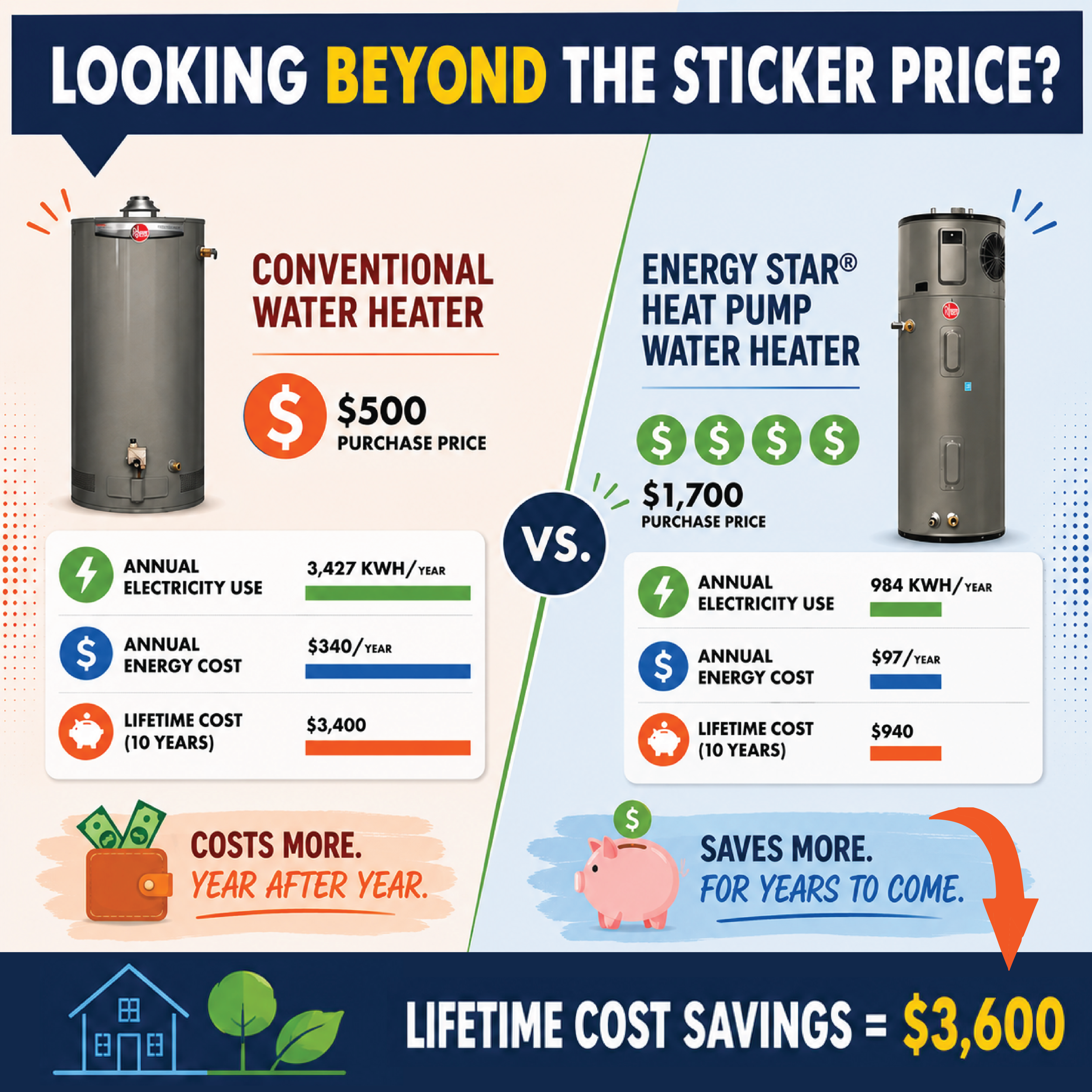
That distinction matters because the lowest-priced appliance isn't always the least expensive. A washer, water heater, or other household appliance may cost less upfront, but if it consumes more electricity and water every month for the next decade or longer, those operating costs will quickly outweigh the initial savings.
Looking Beyond the Sticker Price
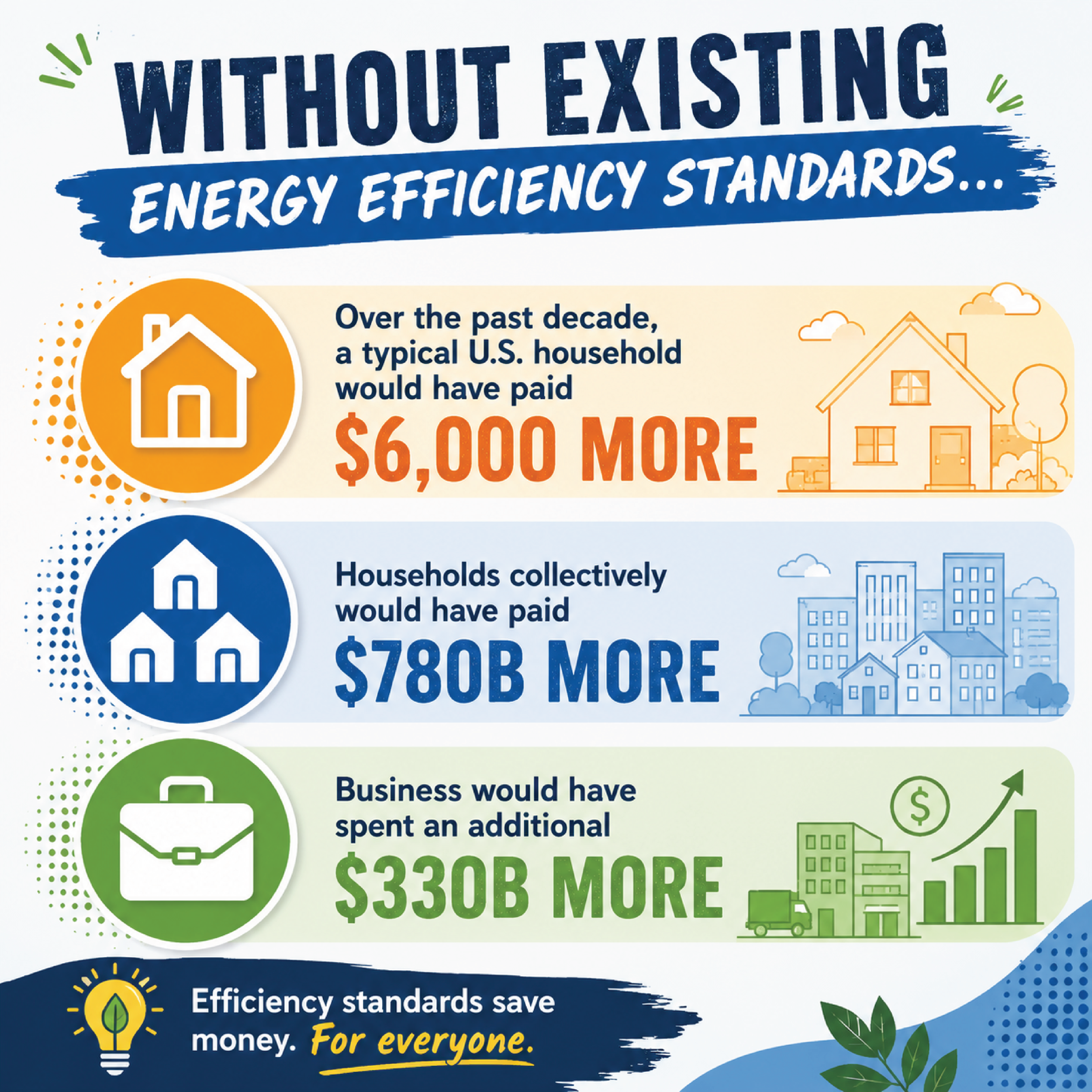
While you might save more at the point of purchase in a big box store if efficiency standards are rolled back, research shows that more efficient appliances are worth the higher price over time. Without existing efficiency standards, a typical U.S. household would have paid about $6,000 more on their utility bills over the past decade. Households collectively would have paid $780 billion more, while businesses would have spent an additional $330 billion.
How many of us ever even get to buy a new appliance? How many appliances have you bought in your lifetime? The fact is, most of us are using the same appliances that were there when we rented or bought our places, and those appliance standards are keeping every one of us from paying more every month!
Why Rural America Has More at Stake
This issue is particularly important for rural households.
Across much of rural America, families spend a larger share of their income on energy than households in urban areas. Homes are often larger, driving distances are longer, and access to alternative fuels or transportation options may be limited. For many rural families, replacing a major appliance is a significant financial burden. Choosing a lower-cost appliance that carries higher operating expenses can increase household utility bills for well over a decade.
Electricity demand is growing rapidly across the country as utilities respond to new data centers, manufacturing growth, electrification, and increasingly frequent periods of extreme heat. During this summer's heat waves, regional grid operators across the United States warned of tightening available energy and took extraordinary steps to maintain reliability.
Just last month, regional transmission organizations were under stress. PJM declared emergency operations, MISO prepared for record energy demand, and the Southwest Power Pool repeatedly issued warnings to prevent outages. The U.S. Department of Energy also issued an emergency order to support grid reliability.
These events underscore an important reality: every megawatt of avoided demand matters.
For decades, electric utilities, including the nation's more than 900 rural electric cooperatives, have invested in energy efficiency because reducing electricity demand is often less expensive than building new power plants, expanding transmission systems, or purchasing additional fuel. Regulators routinely evaluate these investments using cost-effectiveness tests, and energy efficiency consistently ranks among the lowest-cost resources available.
Lower electricity demand helps reduce peak loads, delay costly infrastructure investments, lower fuel costs, and strengthen grid reliability. Because rural electric cooperatives are member-owned, these savings benefit entire communities, not just individual households.
DOE Seeks Public Input
The Department of Energy is currently reviewing the analytical methods it uses when developing appliance efficiency standards. The request for information specifically references products such as washing machines, dishwashers, water heaters, gas stoves, toilets, and shower heads.
This review presents an important opportunity for rural consumers, rural electric cooperative members, farmers, businesses, local leaders, and other stakeholders to share their perspectives.
Consumer choice is important, but so are the long-term operating costs families pay every month and the broader impacts on the electric grid. For rural America, affordability means more than the price tag in the showroom. It means manageable monthly utility bills, reliable electric service, and avoiding unnecessary infrastructure investments that ultimately raise costs for everyone.
Make Your Voice Heard
The Department of Energy is accepting public comments that can be submitted through Regulations.gov by September 8th. (Use Docket EERE-2022-BT-OT-0004)
If you believe appliance standards should continue to be evaluated using transparent, evidence-based analysis that considers lifetime consumer costs and impacts on the electric grid, now is the time to speak up.
Thoughtful public comments from rural voices help ensure that federal policy reflects the realities of life in rural America. Your perspective can help shape policies that keep energy affordable, reliable, and accessible for communities across the country.