2025: RPC’s Year in Review

Members of RPC organizations in breakout groups during RPC convening in Minneapolis.
2025 was a tumultuous year for the United States and for those folks working in energy and renewables. Despite political unpredictability, unexplained funding freezes, slashes to key tax credits, announced reorganizations, abrupt policy shifts, and a federal governing style that only sometimes seems intentionally chaotic, the Rural Power Coalition spent the year putting in the legwork to ensure we are well prepared for what’s to come.
In March and April, we ran The Rural Electric Cooperative Co-lab for eight consecutive weeks, a learning series that covered a wide range of topics, from the history and formation of electric co-ops to contemporary programs that make energy upgrades and affordability feasible for rural cooperative utilities. In June, we added a ninth capstone session to tie the breadth of the subject matter together.
The series remains highly relevant to anyone wanting to educate themselves on electric co-ops—especially for folks who want to engage more with their own co-op—the recorded calls of the series can be viewed on YouTube.
In September, we convened the coalition for two days in Minneapolis, where we held working meetings, strategy sessions, and brought each other up to speed on all the regional groundwork being done by RPC members. We identified opportunities and obstacles in this unprecedented national landscape and found common ground on how we would like to allocate our time and resources going forward.
You can read more about our convening here.
While we were in Minneapolis, we also tabled at Farm Aid and got non-stop engagement from festivalgoers, where we hosted rural electric trivia and had conversations about a wide range of energy issues.
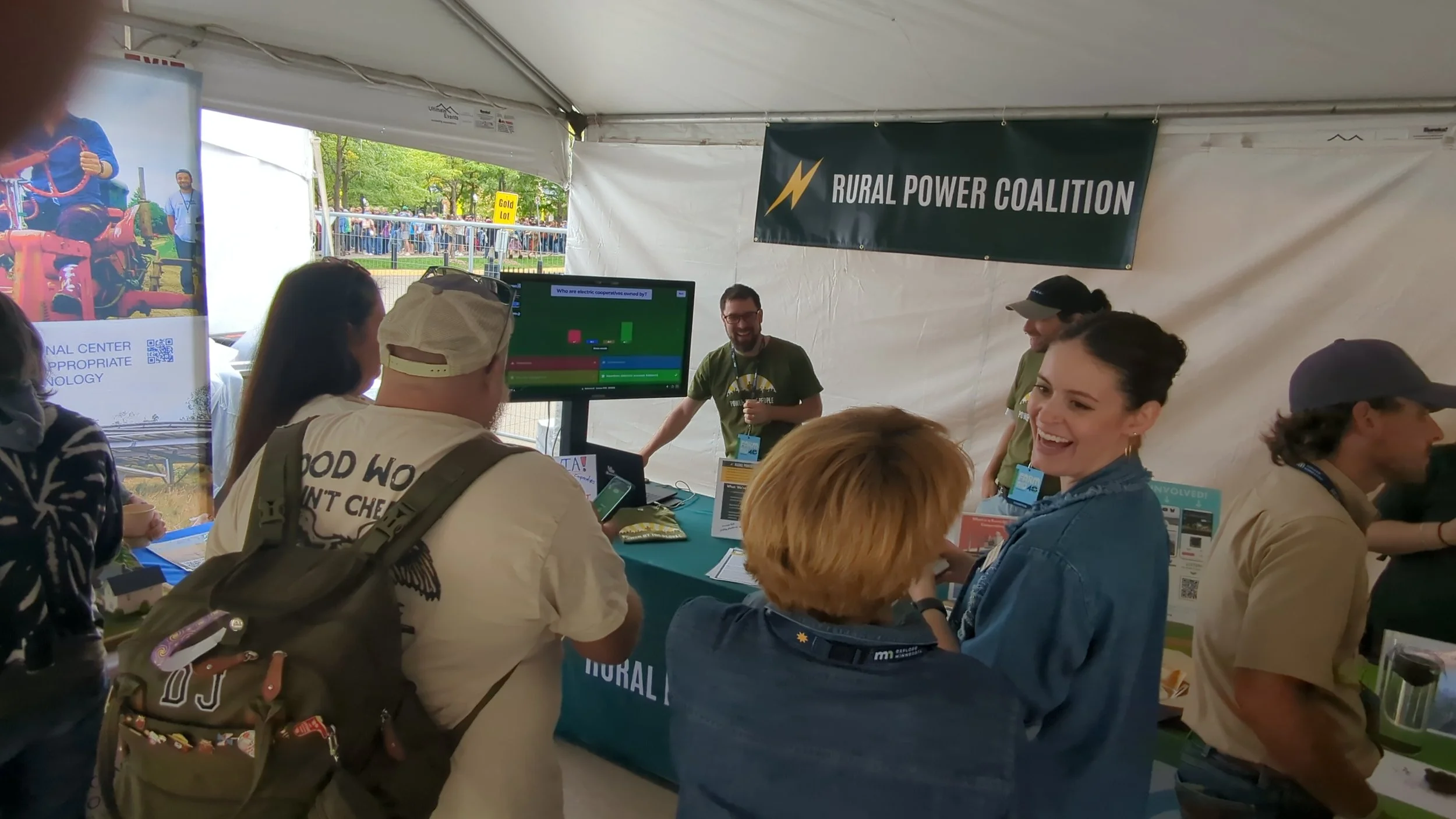
Tabling at Farm Aid with Rural Electric Trivia
Following this convening (and our reassessment and reassertion of priorities), the Rural Power Coalition formed three new working groups that have kept us up to speed and engaged in community benefits plans, data centers, and electric co-op board elections. In 2026, you can expect to see more from RPC in these domains.
In November, we released a comprehensive, 98-page toolkit explicitly designed for rural residents concerned about energy affordability, reliability, and sustainability. The Electric Cooperative Organizing Toolkit helps folks understand how rural electric cooperatives work, how to engage with them, and identify projects and programs that can be implemented at the local utility level.
The toolkit is available here: ruralpower.us/toolkit
The federal actions of 2025 have created significant stress and ongoing challenges for ratepayers and rural folks around the country—and the needs of rural ratepayers are something that RPC always keeps in mind. While costs associated with extreme weather and upgrading aging infrastructure are responsible for some portion of increased energy costs, federal actions are undoubtedly responsible for much of the pain felt on the ground.
To those ends, we highlighted the adverse effects felt by the One Big Beautiful Bill Act (OBBBA) in a video and fact sheet on the new legislation.
Taking action around these pain points, RPC also engaged in defensive work, including demanding ratepayers, including demanding that the federal LIHEAP program staff be reinstated, and that funding be appropriated to the program. LIHEAP helps millions of residents with utility bill payments, and can be a life or death matter; so we collected 298 signatories and sent our letter. While LIHEAP still faces uncertainty, $3.6 billion in funding was released to states for this program.
In other defensive advocacy work, we wrote to the USDA to demand that plans to reorganize the USDA would harm rural communities and must be revisited. The timeline of the reorganization seems to have slowed down, and USDA has acknowledged that almost all feedback on the reorganization plan has been negative.
Elevating stories from the field, RPC placed stories with the Public News Service on a range of issues, including:
How slashing energy tax credits harms agricultural communities in North Carolina
How federal defunding of LIHEAP can be fatal to Alabama residents
Additionally, we released a number of videos, including a short documentary on how RPC member North Dakota Native Vote has been activating tribal members to get more involved in electric co-op engagement and board elections.
You can read more about it and watch the short Spirit Lake documentary here.
We also grew our coalition, adding the Wisconsin Farmers Union as an RPC member.
Read about the Wisconsin Farmers Union here.
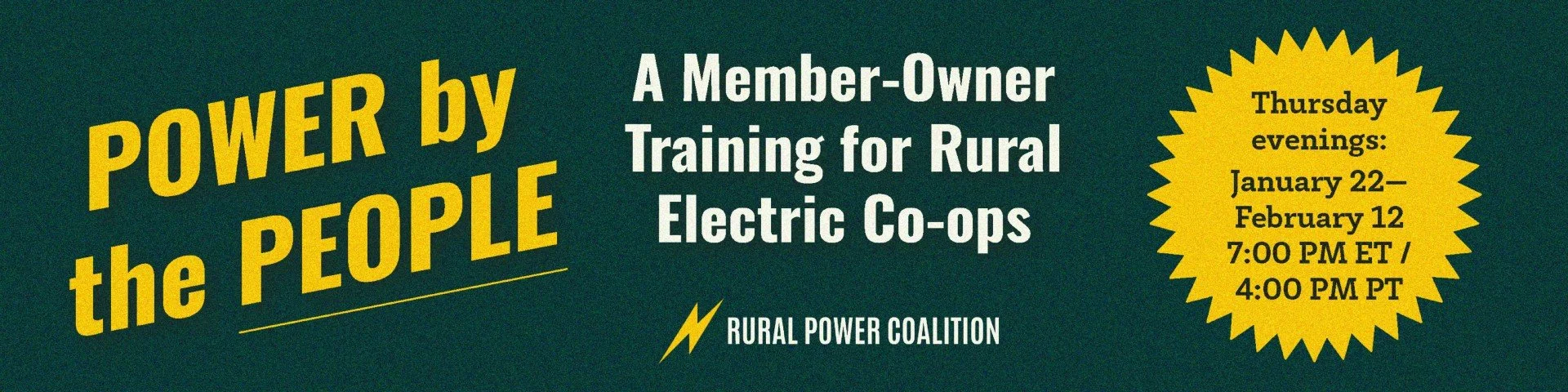
Last but certainly not least, you don’t want to miss what we have been preparing in the final month of this year: an upcoming organizing training for member-owners. On Thursday, January 22, 2026 and running for four consecutive weeks, we will offer a free, virtual training series that equips rural residents with the tools and guidance they need to start or continue doing effective organizing work.
While some domains will require defensive actions in these years, there continues to be immense, untapped potential in pushing from the bottom-up—from member-owners—for progress on energy affordability & weatherization programs, grid investments, community benefits, and new developments.
For this reason, the Rural Power Coalition will kick off 2026 with Power to the People, our training series that will help member-owners of electric co-ops operationalize the content of our recently-released toolkit. The series will be interactive, and led by seasoned organizers and those who have been successful in efforts to apply a range of strategies to improve quality of life for rural residents. All are welcome to register and participate, whether or not they are member-owners.
More information and the RSVP form for the training can be found here:
https://forms.gle/CDwnbzxyq8Dj6gLv5
See you next year!